The Purim Seudah is a joyous feast held on Purim day (14 Adar). The meal commemorates how fate was reversed, and hidden Purim miracles. Typically, the meal includes costumes, music, Torah and dancing.
A wide variety of sweet and savoury traditional foods are enjoyed during Seudat Purim, but how can we celebrate these culinary traditions in a way that reflects Jewish values of compassion and sustainability?
Read below a series of yummy Purim dishes from communities around the world & find out how they can be enjoyed compassionately and sustainably. Additionally, follow the link to discover a plant-based recipe for each!
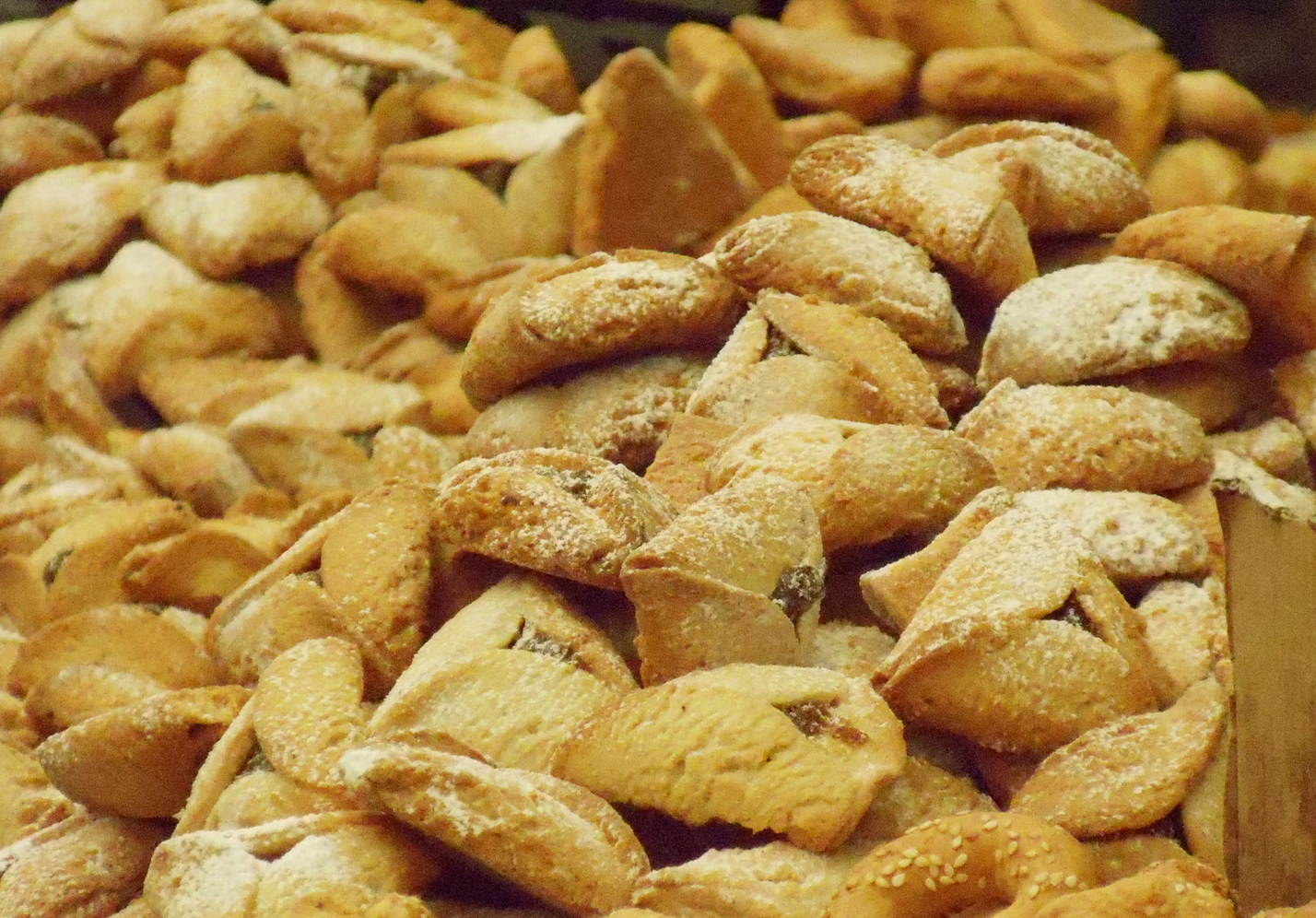
Triangular filled cookies symbolizing Haman’s hat or ears and the defeat of evil; their hidden filling reflects the hidden miracle of Purim. Traditionally made with eggs and butter, but easily made plant-based using oil or vegan butter and fruit or poppy seed fillings.
Stuffed dumplings served for Purim, representing hiddenness through their concealed filling. Usually meat-filled, but can be made plant-based with mushrooms, lentils, or potatoes in egg-free dough.
Savoury stuffed pastries symbolizing the hidden nature of the Purim story. Chickpea or vegetable versions are naturally plant-based; simply avoid meat or dairy fillings.
Small savory pastries often served at festive occasions, including Purim, sometimes filled with spinach or eggplant. Vegetable versions can be fully plant-based when made with oil-based dough and no cheese.
Flaky filled pastries connected to Purim’s theme of hiddenness. Potato, mushroom, or spinach fillings can easily be made plant-based using vegan puff pastry.
Debla (Sephardi: Libyan & Tunisian)
Twisted, honey-soaked fried pastries symbolizing sweetness and joy after reversal of fate. Often contains eggs and honey, but can be made plant-based with egg-free dough and sugar or date syrup.
Ma’amoul (Sephardi & Mizrahi: Middle Eastern)
Shortbread-style cookies with hidden date or nut fillings reflecting Purim’s concealed miracles. Traditionally buttery, but easily adapted with plant-based margarine or coconut oil.
Cooked chickpeas recalling Queen Esther’s tradition of eating legumes in the palace to keep kosher. Naturally plant-based.
Ojos de Haman (Sephardi: Spanish & Latin American)
“Eyes of Haman” cookies with a visible jam center symbolizing triumph over the villain. Usually made with butter and eggs but easily prepared with vegan dough and fruit preserves.